vedos.cz
450,000
customers (domains) on vedos.cz

Field report
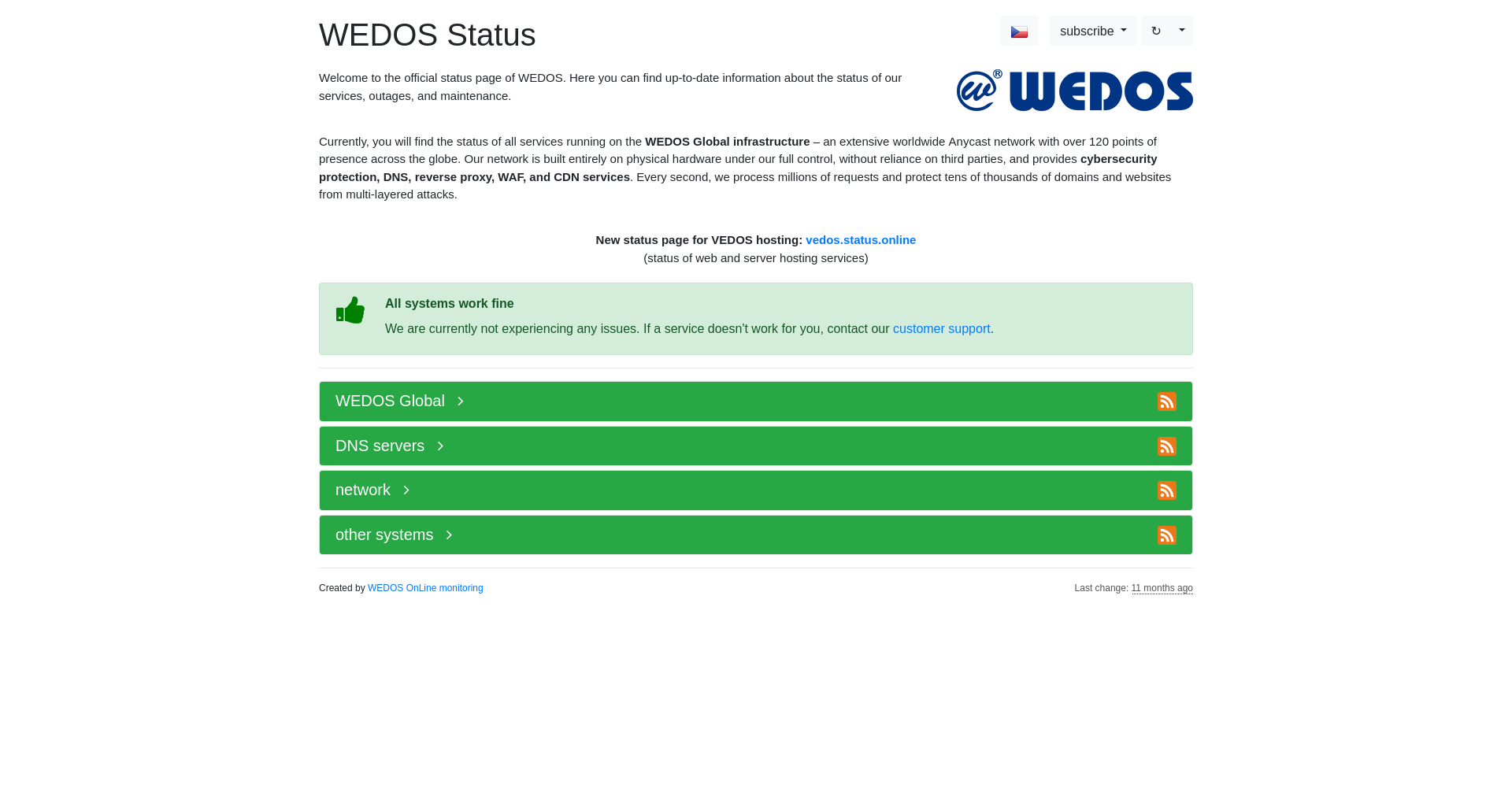
WEDOS runs its monitoring on infrastructure that has nothing to do with WEDOS. When something breaks inside WEDOS, the monitoring and the status pages stay up. That is the whole point.
Most monitoring is built into the same stack as the services it watches. It is convenient, and it fails in the worst possible way: when the infrastructure goes down, the monitoring goes dark and the status page goes down with it, exactly when customers most need to know what is happening.
So the real question is not only "are we monitoring," but "will the monitoring still be there during the incident." WEDOS wanted reporting that keeps working through an outage, not one that falls over alongside it.
wedos.online runs as an external supplier, built entirely outside WEDOS infrastructure. That single decision is what keeps it independent during an outage. From there, one monitoring engine is reused for three different jobs, which is why WEDOS does not run three separate monitoring tools for vedos.cz, wedos.com and WEDOS Protection.
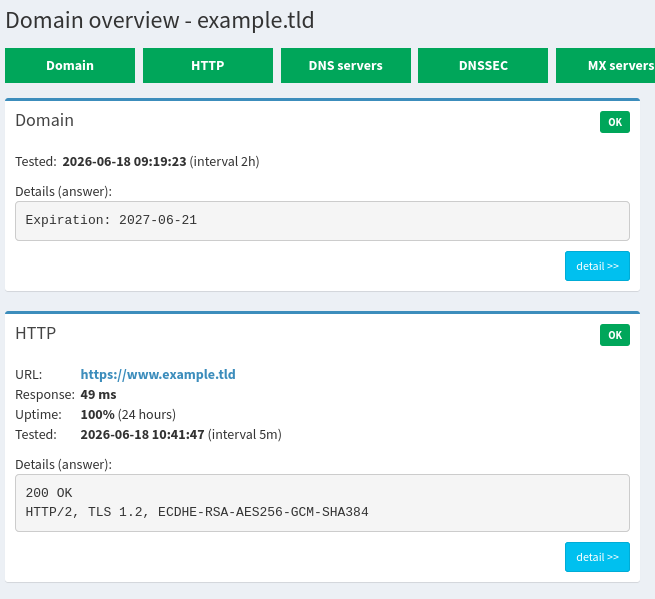
vedos.cz sells monitoring as its own product without building or operating a monitoring stack. EWM is wedos.online under the vedos.cz brand.
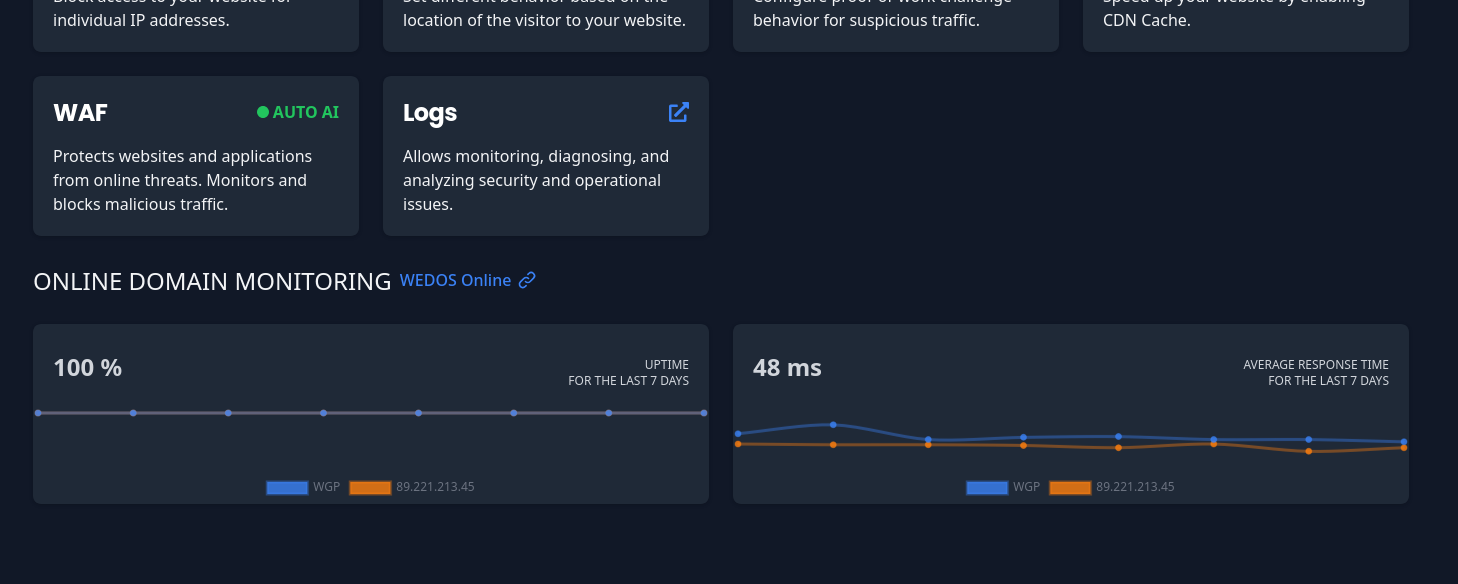
Customers see uptime and response where they already manage protection, with no extra tool to open. The data comes straight from wedos.online.
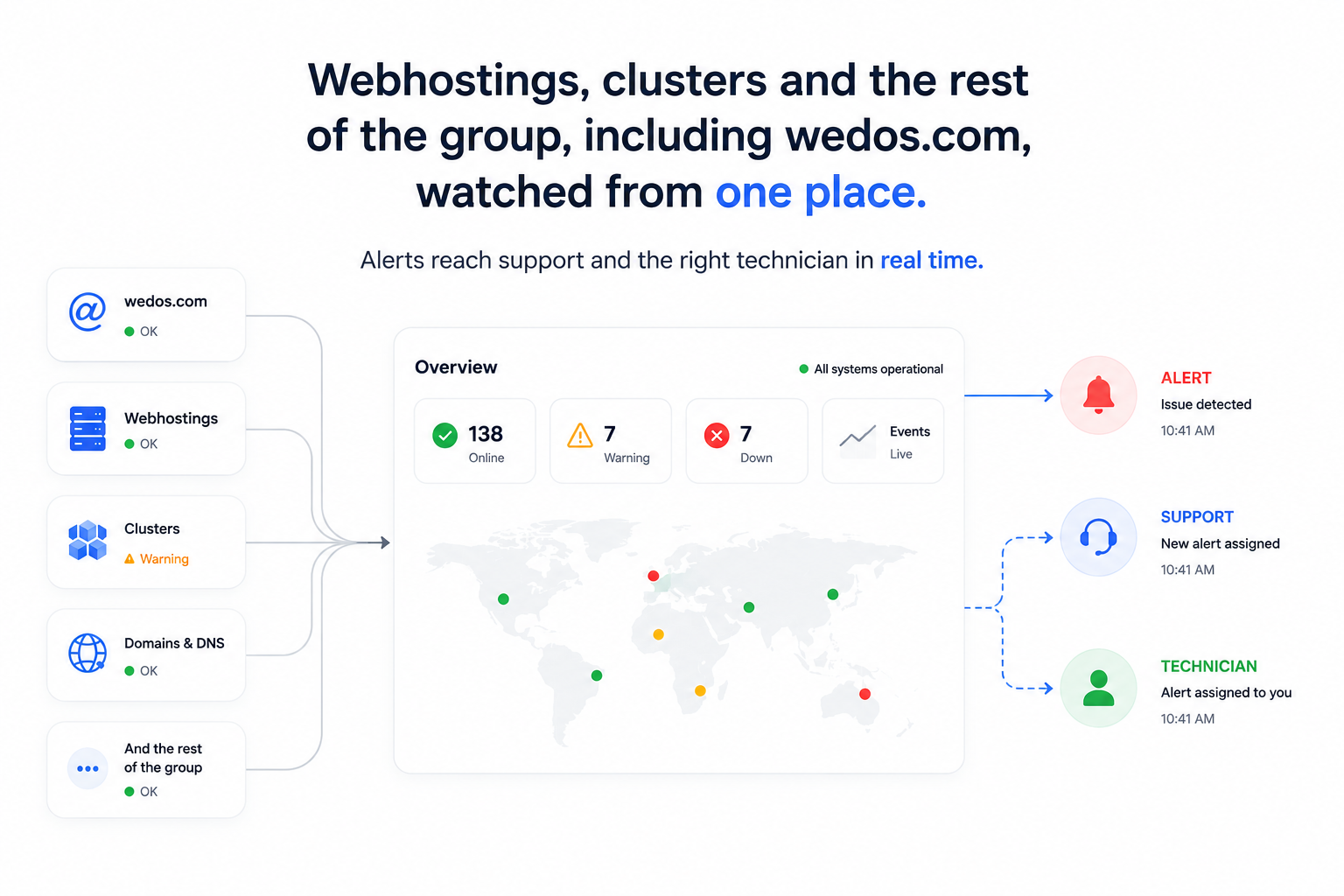
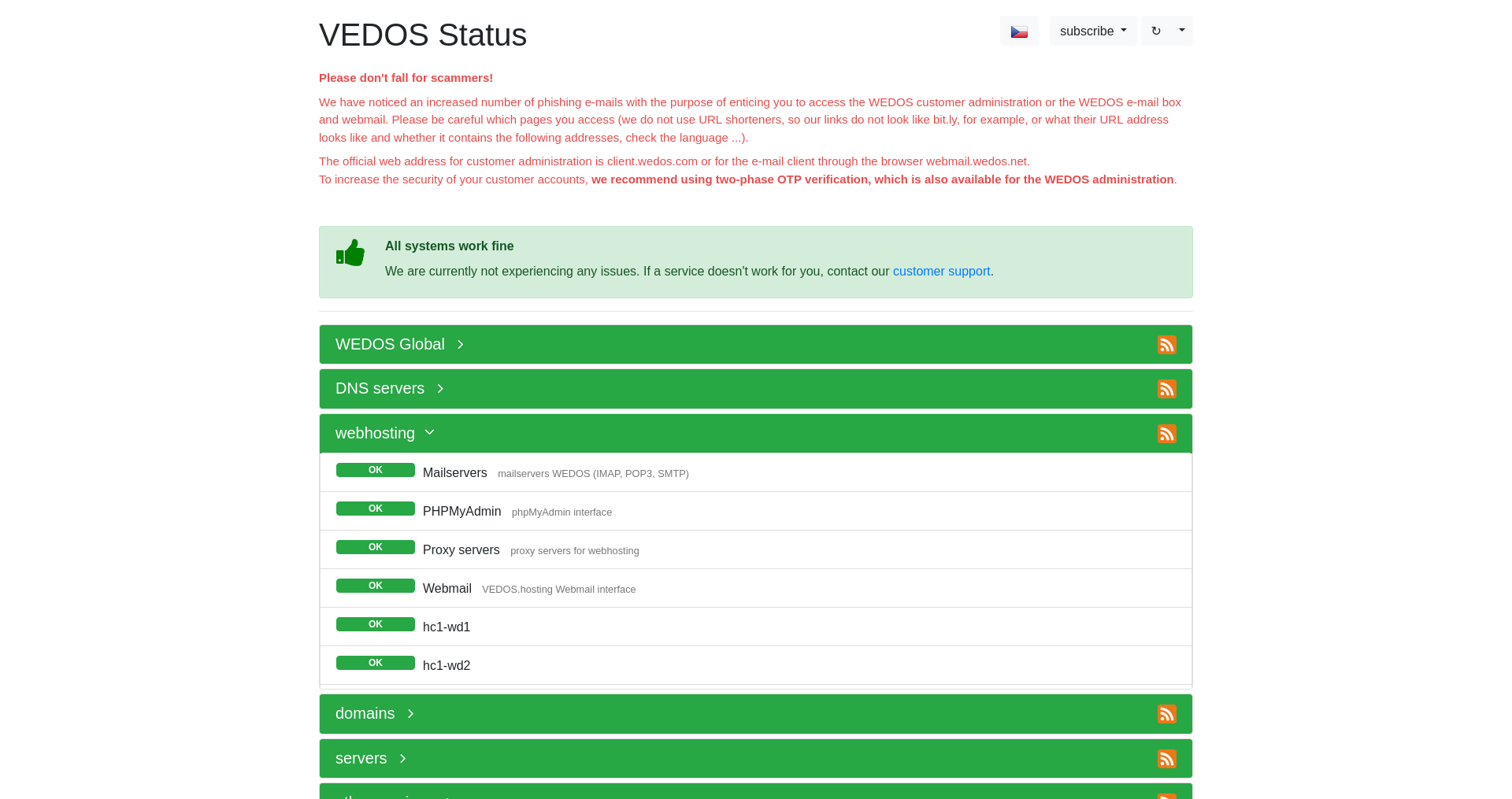
Webhostings, clusters and the rest of the group, including wedos.com, watched from one place. Alerts reach support and the right technician in real time.
Between the two customer products, more than 150,000 customer-facing monitors are live (51,482 EWM plus 101,000 in the Protection dashboard). And that is only the part that serves customers.
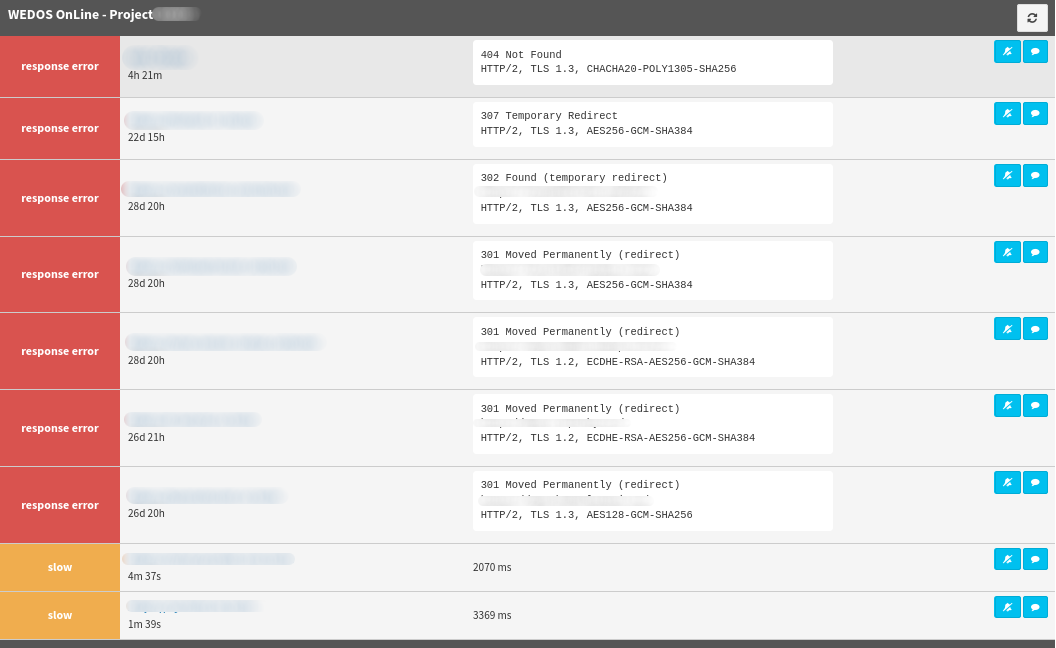
Because they live outside WEDOS, the status pages keep reporting through an outage instead of disappearing with it. Alongside the public pages there is an internal monitoring center with a deeper level of detail, built for customer support so the team has more context than the public view shows.
None of this is specific to WEDOS. Each advantage comes from one decision, keeping the monitor separate from the things it watches, and from treating monitoring as a layer to reuse rather than a feature to rebuild. Any hosting or service provider can apply the same reasoning.
When the monitor runs outside the infrastructure it checks, it keeps checking and keeps reporting at the exact moment an in-house tool would go dark with everything else.
The same monitoring layer feeds a reseller product, a customer dashboard, and internal operations. One engine to run and trust, instead of three disconnected tools drifting apart.
Real-time alerts routed to the people who can act shorten the gap between something breaking and someone fixing it. The first to know should be the provider, not the customer.
A public status page absorbs the "is it just me" questions during an incident, sets expectations, and turns silence into trust. It only works if it stays up when the platform does not.
The same engine can be sold as a product or bundled as a value-add. Monitoring stops being pure overhead and starts earning, while making the core service stickier.
A centralized, automated monitoring layer grows with the fleet instead of needing manual setup per service. The model that watches a hundred services watches hundreds of thousands the same way.
Put together, the architecture is the feature. Nothing here runs without monitoring, and the monitoring is the one part designed to survive.
wedos.online is a blackbox built for WEDOS, but the solution replicates for any other provider, in two ways.
The way vedos.cz resells EWM to its own customers. A ready monitoring product to extend your offering.
The way WEDOS Protection surfaces uptime and response data where customers already are.
WEDOS Online is the same independent monitoring WEDOS runs across its own services. If you are weighing how to monitor yours, it is worth a look, as a product or as a value-add.
See how WEDOS Online works